
Hemp isn’t some trendy new “superfabric.” It’s the oldest textile material in human history. We wore it, sailed with it, wrote on it, and built with it for thousands of years — until we collectively forgot. Here are seven facts about hemp fiber that should make you question everything you thought you knew about textiles.
1. The Word “Canvas” Literally Comes from “Cannabis”
The English word “canvas” traces directly back to the Latin cannabis, through the Old French canevas. That’s not a coincidence or a loose etymology — canvas was originally made from hemp. Every great oil painting from the Renaissance? Painted on hemp. Every sail that crossed the Atlantic? Hemp. The word itself is a receipt for how central this plant was to civilization.
2. The USS Constitution Needed 120,000 Pounds of Hemp Rope
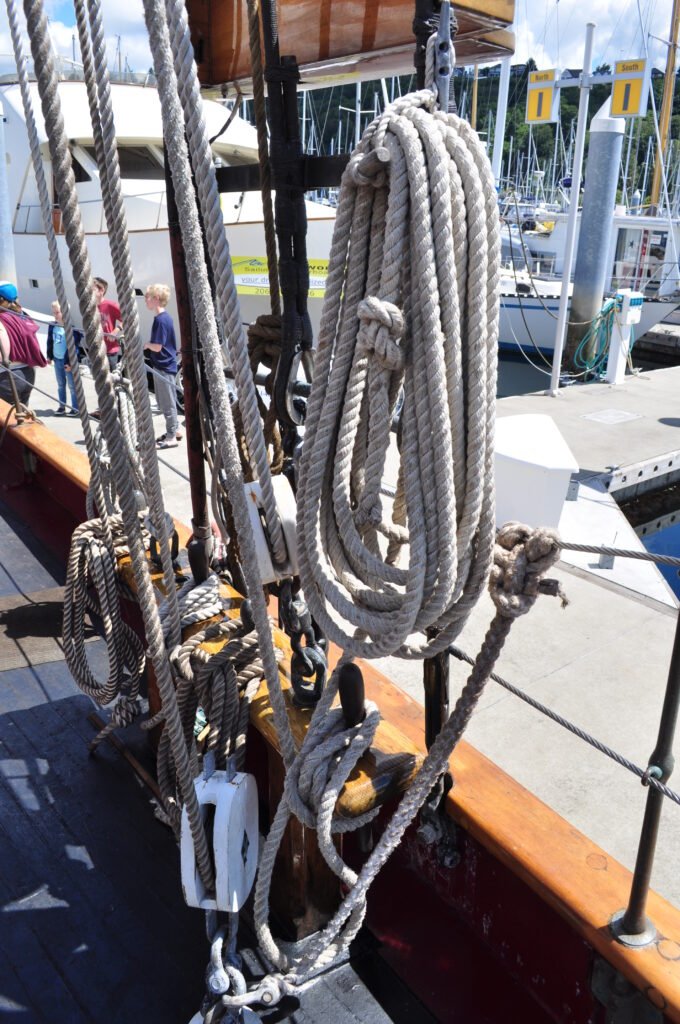
When “Old Ironsides” launched in 1797, she carried over 120,000 pounds of hemp fiber in her rigging and ropes alone. That’s 60 tons of hemp on a single ship. The early American Navy ran on hemp — it was so critical to national defense that colonial governments required farmers to grow it. George Washington and Thomas Jefferson both cultivated hemp on their plantations.
3. The Oldest Textile Ever Found Is Hemp — 8,000 BCE
Archaeologists discovered fragments of hemp cloth in ancient Mesopotamia (modern-day Turkey) dating back to approximately 8,000 BCE. That makes hemp the oldest known textile fiber in human history — predating cotton, wool, silk, and linen by thousands of years. We didn’t discover hemp. Hemp discovered us.
4. Hemp Uses 95% Less Water Than Cotton
This is the stat that should end the cotton industry as we know it. Growing enough cotton for one kilogram of textile requires roughly 20,000 liters of water. Hemp? 300 to 500 liters. That’s a 95% reduction in water usage for a fiber that outperforms cotton in nearly every measurable way.
In a world where freshwater scarcity is becoming a crisis — from California’s droughts to the drying Aral Sea (destroyed partly by cotton farming) — this isn’t a fun fact. It’s an emergency signal we keep ignoring.
5. Hemp Fiber Is Twice as Strong as Cotton and Lasts Twice as Long
Hemp fiber has a tensile strength roughly double that of cotton. A hemp garment can last 20 years or more with proper care, compared to about 10 years for cotton. And unlike synthetic fabrics, hemp gets softer with every wash without losing structural integrity. It’s also naturally antimicrobial and UV-resistant.
We replaced the strongest, most durable natural fiber in history with a water-guzzling crop that wears out in half the time. That’s not progress — that’s marketing.
6. Hemp Was Planted at Chernobyl to Clean Radioactive Soil
After the 1986 nuclear disaster at Chernobyl, scientists planted hemp in the contaminated exclusion zone as part of a process called phytoremediation — using plants to extract heavy metals and radioactive isotopes from soil. Hemp was chosen because its deep root system and rapid growth make it exceptionally effective at pulling toxins like cesium-137, strontium-90, and heavy metals out of contaminated ground.
The same technique has been used at other contaminated sites around the world. Hemp doesn’t just grow in bad soil — it cleans bad soil.
7. BMW, Mercedes, and Other Automakers Use Hemp Plastic Right Now
BMW, Mercedes-Benz, Audi, and other major automakers already use hemp-based biocomposites in their vehicles — primarily in door panels, dashboards, and interior trim. These hemp plastic components are lighter than fiberglass, have excellent impact resistance, and reduce the overall weight of the vehicle, improving fuel efficiency.
This isn’t a pilot program or a concept car. This is mass production, happening right now, in vehicles you can buy today at a dealership.
Hemp was THE material of civilization for ten thousand years. Clothing, sails, rope, paper, canvas — all hemp. Prohibition didn’t just make a plant illegal. It erased an entire material history. We’re just now starting to remember what we lost.