
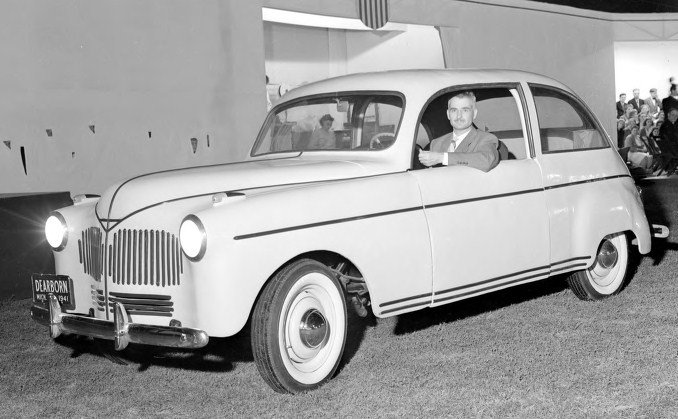
On August 13, 1941, Henry Ford stood in front of a crowd in Dearborn, Michigan, and took a sledgehammer to the trunk panel of his newest prototype. The panel didn’t dent. It barely flexed. The crowd went silent.
That car was made from hemp.
The Soybean Car That Was Really a Hemp Car
Ford’s “Soybean Car” — sometimes called the “hemp body car” — used panels made from a plastic composite of soybeans, wheat, hemp, and flax. The panels were just one-quarter inch thick, but they had an impact strength 10 times greater than steel. The entire body was 30% lighter than a conventional steel car. Ford wasn’t just experimenting — he was proving a point. Agricultural materials could replace industrial ones, and they’d perform better doing it.
But here’s the part that really matters: Ford designed the car to run on hemp ethanol. Not gasoline. Not diesel. Hemp fuel. He saw the entire lifecycle — grow the car, fuel the car, and when it’s done, let it decompose back into the earth. No mining. No drilling. No petroleum.
Think about that for a second. In 1941, we had a working prototype of a car that was stronger than steel, lighter than aluminum, and ran on fuel you could grow in a field. Eighty-five years later, we’re still pumping oil out of the ground and wondering why the planet is on fire.
What Killed the Hemp Car
World War II halted Ford’s project. Wartime manufacturing priorities took over every factory floor in America. But the war ended in 1945 — and the hemp car never came back. Why?
Because by then, the petroleum industry had consolidated its grip on American manufacturing. DuPont had patented nylon. Standard Oil controlled the fuel supply. And the Marihuana Tax Act of 1937 had already made hemp cultivation effectively illegal, lumping industrial hemp in with marijuana despite them being fundamentally different plants.
The science didn’t fail. The politics killed it.
The Science Still Holds Up — 85 Years Later
A 2010 study by the University of Connecticut found that hemp seed oil has a 97% conversion rate to biodiesel. That’s not a typo — 97%. For context, that’s one of the highest conversion efficiencies of any plant-based oil tested.
Hemp produces 51% more biodiesel per acre than soybeans, which are currently the leading biodiesel crop in the United States. And unlike soy, hemp doesn’t need the massive amounts of pesticides and fertilizers that drain into our waterways.
Then there’s the carbon story. One hectare of industrial hemp absorbs roughly twice as much CO2 as one hectare of forest — and it does it in just 100 days, not decades. A study from Cambridge found that hemp is one of the most efficient carbon-capture crops on the planet.
Why This Still Matters
Every time someone tells me hemp is a “niche” material or a “novelty crop,” I point them to Ford’s sledgehammer test. This isn’t some theoretical future technology. It worked in 1941. It works now. The only thing standing between us and hemp-based vehicles, fuels, and materials is political will and the entrenched interests of the petroleum industry.
Henry Ford saw it 85 years ago. The oil industry killed hemp fuel — not the science. The science was always there. We just weren’t allowed to use it.
The 2018 Farm Bill finally re-legalized industrial hemp in the United States. We’re catching up. But we’ve got 85 years of lost progress to make up for, and the clock on climate change isn’t slowing down.
Ford built a better car in 1941. It’s about time we finished what he started.